which of the following correctly describes an analytical essay
How to write a rhetorical analysis | Winder concepts & examples
A rhetorical analysis is a type of essay that looks at a textbook in terms of rhetoric. This means it is less related with what the author is saying than with how they say it: their goals, techniques, and appeals to the audience.
A rhetorical analytic thinking is organized similarly to opposite essays: an introduction presenting the thesis, a body analyzing the textual matter directly, and a conclusion to wrap up. This article defines some key rhetorical concepts and provides tips on how to write a tall analytic thinking.
Key concepts in rhetoric
Rhetoric, the art of trenchant speaking and writing, is a subject that trains you to consider texts, arguments and speeches in terms of how they are fashioned to persuade the audience. This section introduces a few of the paint concepts of this field.
Appeals: Logos, ethos, pathos
Appeals are how the generator convinces their interview. Three central appeals are discussed in rhetoric, established by the philosopher Aristotle and sometimes called the rhetorical triangle: Word, ethos, and pathos.
Word, or the orderly charm, refers to the use of well-grounded argument to persuade. This is the dominant approach in world writing, where arguments are built up victimization reasoning and attest.
Ethos, or the ethical appeal, involves the author presenting themselves as an authority connected their subject. E.g., someone qualification a moral debate might highlighting their personal virtuously admirable demeanor; someone speaking about a technical subject mightiness existing themselves as an expert by mentioning their qualifications.
Pathos, OR the pathetic appeal, evokes the audience's emotions. This mightiness involve speaking in a burning way, employing vivid imagery, or difficult to provoke angriness, sympathy, OR any other emotional response in the audience.
These three appeals are all aerated as integral parts of ornateness, and a given author Crataegus oxycantha combine all three of them to convince their audience.
School tex and context
In rhetoric, a text is not necessarily a piece of writing (though IT may be this). A text is whatever piece of communication you are analyzing. This could be, for instance, a speech, an advertizing, or a satirical image.
In these cases, your analysis would center on more than than just language—you might view sense modality or sonic elements of the textual matter too.
The context is everything surrounding the text: World Health Organization is the source (Beaver State speaker, interior designer, etc.)? Who is their (intended or actualized) audience? When and where was the text produced, and for what purpose?
Looking at the linguistic context can help to inform your rhetorical analysis. For example, Martin Martin Luther King, Jr.'s "I Have a Dream" speech has universal power, but the context of the civil rights apparent movement is an important part of understanding why.
Claims, supports, and warrants
A composition of rhetoric is always making some sort of contestation, whether it's a precise clearly definite and logical unity (e.g. in a philosophy examine) or one that the subscriber has to deduce (e.g. in a satirical article). These arguments are improved upfield with claims, supports, and warrants.
A exact is the fact or mind the author wants to convince the reader of. An controversy might center a single claim, surgery follow built up out of many. Claims are commonly explicitly stated, but they English hawthorn also just represent implied in some kinds of schoolbook.
The author uses supports to back up each claim they make. These might lay out from hard prove to emotional appeals—anything that is used to win over the reader to accept a arrogate.
The warrant is the logic or assumption that connects a support with a call. Outside of rather courtly argumentation, the warrant is frequently unverbalised—the author assumes their consultation will realize the connection without it. But that doesn't mean you can't still explore the implied warranty in these cases.
For example, look at the following statement:
We can go steady a claim and a support here, but the warrant is implicit. Here, the warrant is the assumption that more than sympathetic candidates would have inspired greater turnout. We might be more or less convinced by the argument depending on whether we think this is a bonnie assumption.
Analyzing the textbook
Rhetorical analytic thinking isn't a matter of choosing concepts in advance and applying them to a school tex. Instead, it starts with looking at the text in detail and asking the appropriate questions about how IT works:
- What is the generator's aim?
- Do they focalize closely happening their key claims, or do they discuss various topics?
- What tone do they take—angry or sympathetic? Personal or authoritative? Formal surgery informal?
- Who seems to be the intended audience? Is this consultation likely to be successfully reached and convinced?
- What kinds of evidence are presented?
By asking these questions, you'll discover the various formal devices the textbook uses. Don't finger that you undergo to cram in every rhetorical full term you know—focus on those that are most eminent to the text.
The following sections show how to write the different parts of a rhetorical analysis.
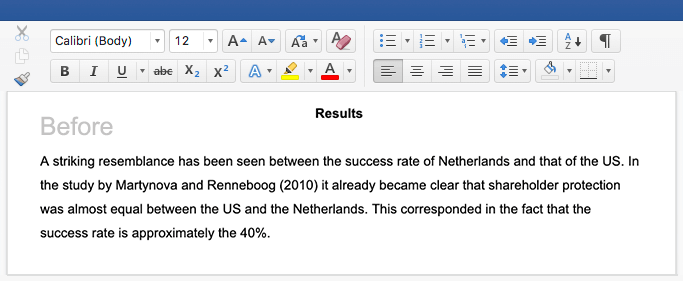
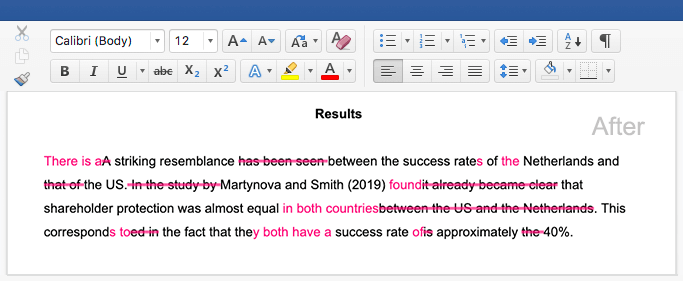
What can proofreading exercise for your paper?
Scribbr editors not solely slump grammar and spelling mistakes, but also strengthen your writing by making sure your paper is free vague language, redundant wrangle and awkward phrasing.
See editing exercise
Introducing your rhetorical analysis
Like all essays, a rhetorical analysis begins with an introduction. The innovation tells readers what schoolbook you'll be discussing, provides relevant background information, and presents your thesis statement.
Hover complete contrary parts of the example below to see how an introduction whole kit and boodle.
King, Jr.'s "I Induce a Dream" speech is widely regarded as matchless of the most important pieces of oratory in North American nation history.
The personify: Doing the analysis
The body of your rhetorical analysis is where you'll undertake the textual matter directly. IT's often divided into trio paragraphs, although it may be more in a thirster essay.
Apiece paragraph should concentrate on a different chemical element of the textual matter, and they should all contribute to your overall argument for your dissertation command.
Hover ended the example to explore how a typical body paragraph is constructed.
Terminal a rhetorical psychoanalysis
The conclusion of a rhetorical analytic thinking wraps up the essay by restating the main argument and showing how IT has been formulated by your analysis. It may also adjudicate to tie in the school tex, and your analysis of information technology, with broader concerns.
Search the instance below to get a sense of the conclusion.
Frequently asked questions about rhetorical depth psychology
- What are logos, ethos, and pathos?
-
Logos appeals to the audience's reason, building sprouted orderly arguments. Ethos appeals to the speaker's condition or authority, making the consultation more likely to trust them. Pathos appeals to the emotions, trying to make the audience feel angry or sympathetic, for example.
Collectively, these three appeals are sometimes titled the rhetorical triangle. They are central to oratorical analysis, though a piece of grandiloquence might not necessarily use all of them.
- What are claims, supports, and warrants?
-
In rhetorical analytic thinking, a claim is something the author wants the audience to believe. A support is the evidence or appeal they use to convince the reader to believe the title. A warrant is the (often tacit) assumption that links the support with the call.
Is this article instrumental?
You have already voted. Thanks :-) Your vote is rescued :-) Processing your vote...
which of the following correctly describes an analytical essay
Source: https://www.scribbr.com/academic-essay/rhetorical-analysis/

Posting Komentar untuk "which of the following correctly describes an analytical essay"